A Deep Technical Analysis of Memory Models, Registers, and CPU Execution
The distinction between x86 and x64 processor architectures is frequently reduced to a simplistic comparison of memory limits or operating system compatibility. In reality, the transition from x86-32 to x86-64 represents a fundamental architectural shift that reshaped how software is compiled, executed, scheduled, and secured.
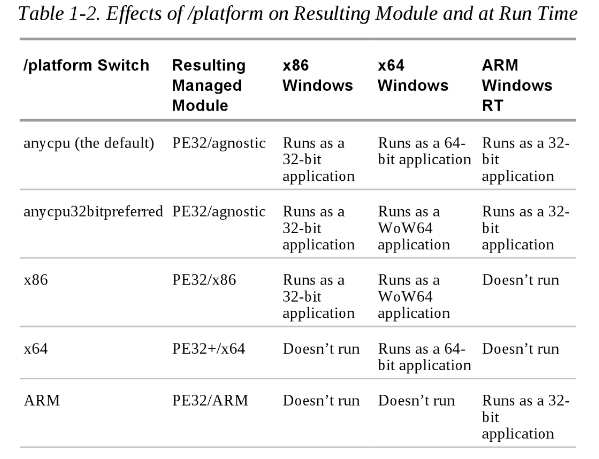
Beyond address width, the change affects register availability, calling conventions, instruction encoding, virtual memory design, and overall execution efficiency. This article examines the difference at a low architectural level, explaining why x86-64 is not merely a larger version of x86, but a structurally superior execution environment for modern software and games.

Architectural Background and Design Philosophy
The x86-32 architecture evolved incrementally from earlier 16-bit designs, prioritizing backward compatibility over architectural cleanliness. While this decision ensured decades of software continuity, it also preserved fundamental limitations that became increasingly problematic as applications grew more complex and memory-intensive. The architecture relied on a small set of general-purpose registers, a stack-heavy execution model, and a tightly constrained virtual address space.
x86-64 was introduced not as a cosmetic upgrade, but as a corrective redesign. It preserved backward compatibility while expanding core architectural resources and simplifying long-standing inefficiencies. The result was an execution model that better aligns with modern compiler design, parallel workloads, and large memory environments.
Too technical?
Get a simplified explanation of the core idea
Memory Addressing and Virtual Address Space
In x86-32 systems, virtual addresses are limited to 32 bits, resulting in a maximum addressable space of four gigabytes. Operating systems typically divide this space between user applications and the kernel, further reducing the memory available to individual processes. Even with techniques such as Physical Address Extension, applications remain constrained by the 32-bit virtual address ceiling, leading to fragmentation, allocation failures, and instability under heavy workloads.
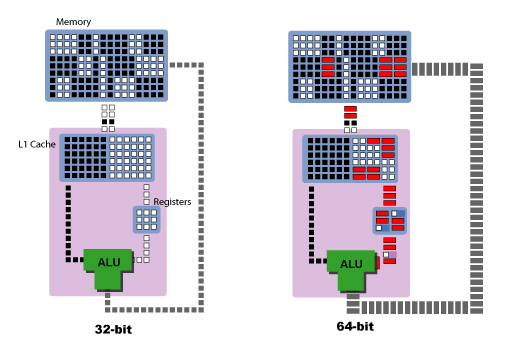
x86-64 dramatically expands the virtual address space by introducing 48-bit canonical addressing. This allows each process to access hundreds of terabytes of virtual memory, effectively removing address space as a limiting factor. For modern games and engines that stream large assets, manage complex memory pools, and rely on aggressive caching strategies, this architectural change alone eliminates entire classes of failure scenarios common on 32-bit systems.
Too technical?
Explain it to me like I’m 5
CPUs optimize for low-latency execution, branch prediction accuracy, and complex control flow.
GPUs optimize for maximum throughput, sacrificing per-thread flexibility in exchange for massive parallelism.
Where a CPU might execute a few dozen instructions simultaneously with aggressive speculative execution, a GPU executes tens of thousands of threads concurrently, assuming that many of them will be stalled at any given moment.
Latency is not avoided — it is hidden.
2. SIMD, SIMT, and the Reality of GPU Parallelism
Modern GPUs operate under a SIMT (Single Instruction, Multiple Threads) execution model.
- Threads are grouped into warps / wavefronts (typically 32 or 64 threads)
- All threads in a warp execute the same instruction
- Divergent control flow forces serialization
This is why shader performance is often dominated not by arithmetic complexity, but by:
- Branch divergence
- Register pressure
- Memory access patterns
In GPU programming, predictability beats cleverness.
3. Streaming Multiprocessors and Compute Units


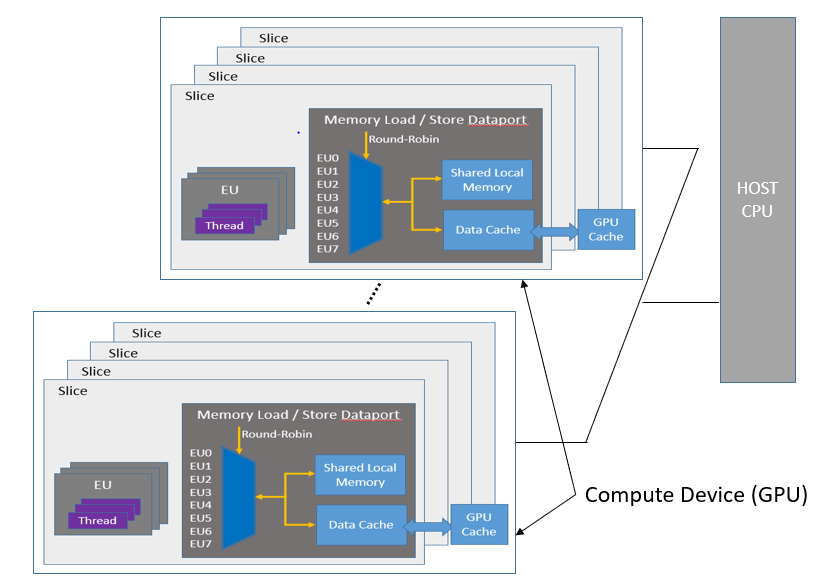
The core building block of a GPU is the Streaming Multiprocessor (SM) or Compute Unit (CU).
Each SM contains:
- Multiple execution pipelines (FP32, INT, Tensor)
- A large register file
- Shared (on-chip) memory
- Warp schedulers
- Instruction caches
Unlike CPUs, GPU cores are in-order, extremely simple, and rely on the scheduler to switch between warps every cycle to hide memory latency.
4. The Modern Graphics Pipeline (Beyond the Simplified Diagram)
Vertex Processing
Vertices are transformed from object space to clip space using matrix multiplication. Skinning, morph targets, and instancing occur here.
Primitive Assembly & Rasterization
Triangles are clipped, projected, and converted into fragments using barycentric interpolation.
Fragment (Pixel) Shading
This stage dominates GPU workload:
- Texture sampling
- Physically Based Rendering (PBR)
- Lighting calculations
- Shadow evaluation
- Screen-space effects
A single pixel may execute hundreds of instructions before being written to the framebuffer.
5. Memory Hierarchy: Why Bandwidth Matters More Than Clock Speed
GPU memory performance is dictated by hierarchy, not capacity alone.
- Registers (per thread)
- Shared memory (per SM)
- L1 cache
- L2 cache
- VRAM (GDDR6 / GDDR6X / HBM)
A cache miss can cost hundreds of cycles, which is why GPUs depend on running thousands of threads to remain productive.
High bandwidth does not reduce latency — it reduces contention.
6. Ray Tracing: Computational Brutality Meets Hardware Acceleration
Ray tracing introduces a fundamentally different workload:
- Recursive ray traversal
- Bounding volume hierarchy (BVH) intersection tests
- Stochastic sampling
Without acceleration, real-time ray tracing is infeasible.
Modern GPUs include:
- Fixed-function BVH traversal units
- Ray–triangle intersection hardware
- AI-assisted denoisers to compensate for low sample counts
Rasterization draws what should be visible.
Ray tracing calculates what light actually does.
7. AI on the GPU: Tensor Operations and Inference in Games
Dedicated tensor execution units allow GPUs to perform massive matrix multiplications efficiently.
In gaming, this enables:
- Temporal upscaling
- Reconstruction of sub-pixel detail
- Noise reduction
- Motion vector inference
These systems do not replace rendering — they reshape the rendering pipeline itself.
The final image is no longer purely rendered. It is partially inferred.
8. Scheduling, Frame Times, and the Illusion of Smoothness
Raw FPS is a misleading metric.
What matters:
- Frame time variance
- Scheduling efficiency
- Queue depth
- Asynchronous compute overlap
Modern GPUs often:
- Render the current frame
- Prepare the next frame
- Execute post-processing
- Run AI inference
- Handle compute shaders
—all simultaneously.
A “smooth” game is a scheduling success story.
9. Power, Thermals, and Performance per Watt
GPU performance is now constrained as much by thermals and power delivery as by silicon capability.
Dynamic voltage and frequency scaling continuously balances:
- Thermal headroom
- Power limits
- Workload characteristics
The fastest GPU is not the one with the highest clocks —
it’s the one that sustains them.
10. Architectural Philosophies Across Vendors
- NVIDIA
Heavy investment in fixed-function hardware and AI integration. - AMD
Strong emphasis on throughput and open standards. - Intel
Aggressive entry with a long-term architectural roadmap.
Different philosophies — same physical limits.
Conclusion: The GPU as a Real-Time Supercomputer
A modern GPU is not a graphics card.
It is a real-time, massively parallel supercomputer constrained by milliseconds, watts, and micrometers.
Every rendered frame represents:
- Billions of transistor state changes
- Trillions of arithmetic operations
- A delicate balance of scheduling and memory locality
All so the player never notices anything at all.
And that — paradoxically — is the greatest achievement of GPU design.